2026 Update
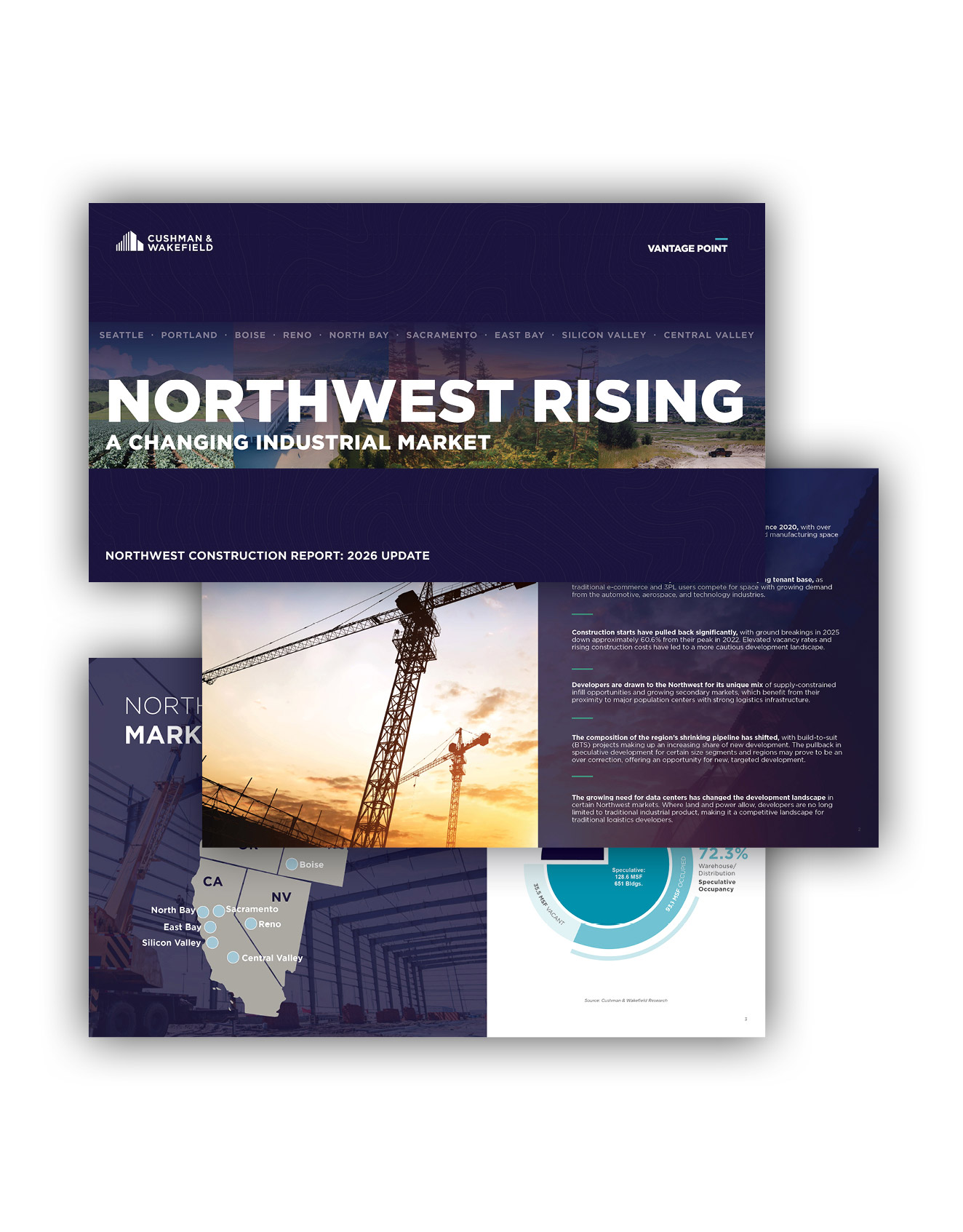
Since 2020, the Northwest has established itself as a critical hub for industrial development, supported by strong logistics infrastructure, access to Pacific ports, and a diversifying tenant base. More than 171.7 million square feet of warehouse/distribution and manufacturing space has been delivered across the region, fueled by demand from e-commerce, 3PL, and growing manufacturing and technology users. However, after peaking in 2022 and 2023, development activity has slowed in recent quarters as rising vacancy, higher construction costs, and economic uncertainty have tempered new construction starts.
Mid-size buildings (100,000 to 299,999 sf) have remained the most active and consistent segment, accounting for a significant share of recent deliveries and tenant demand. Larger-format development has increasingly shifted toward build-to-suit (BTS) execution, reflecting a more cautious approach to speculative risk, while small-bay products continue to face structural undersupply despite strong occupancy levels and sustained leasing demand.
As speculative construction has pulled back, the composition of the development pipeline has evolved. By 2025, BTS projects accounted for a growing share of groundbreakings, signaling a broader shift toward tenant-driven development and more disciplined capital deployment. At the same time, emerging demand from manufacturing users and increased competition for land and power, particularly from data center development, are reshaping site selection and project design across key Northwest markets.
Looking ahead, construction activity is expected to remain measured, with developers focusing on infill opportunities, phased projects, and smaller, more flexible building formats that align with evolving tenant preferences.
This report analyzes speculative construction trends across the major industrial markets of the Northwest. Download the report to read more.